George Takei’s graphic novel They Called Us is a brilliant and enjoyable piece of literature that accommodates individuals of all age groups while teaching the history of the Japanese-American internment at the start of World War II. Reading and discussing the novel’s contents in an academic environment is what I believe is a step in the right direction for establishing racial tolerance in the curriculum. The graphic novel allows students to immerse themselves into George Takei’s, the main protagonist, shoes and walks through his experiences of his family being victimized by Executive Order 9066. Through the illustrations, we can better perceptualize the fear, frustration, curiosity, and uncertainty that many Japanese-Americans faced as they were prosecuted. Overall, They Called Us Enemy is a piece of writing that ensures the reader a cultural reset and insight, that may be needed in regards to recent events concerning racial injustices.
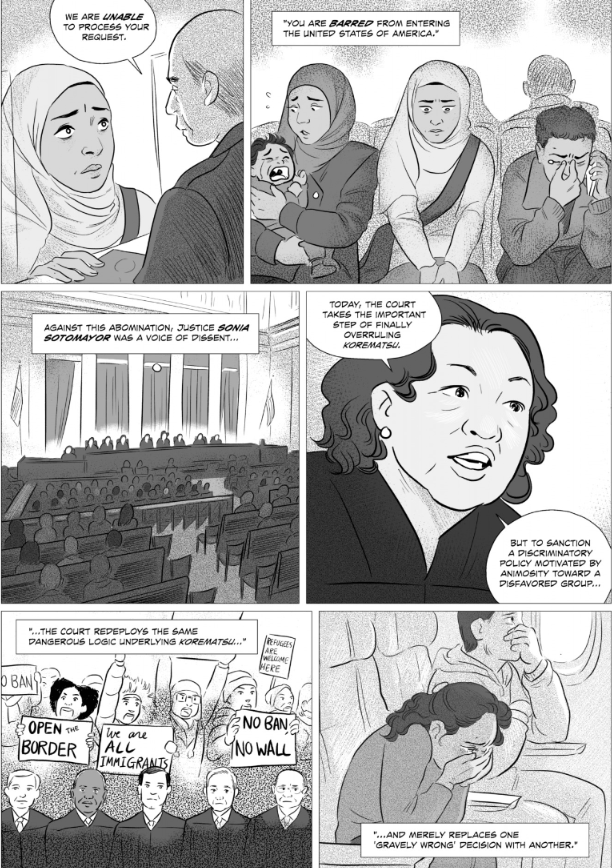
Personally, my read of They Called Us Enemy emotionally resonated with me and evoked many insights. The novel’s message made me question our society’s future and the seemingly unstoppable feedback loop of racism. Page 201 of the novel is a clear example of how racism is still rooted in modern-day society but in the form of deportation of Hispanic and Middle-Eastern immigrants. The recent Black Lives Matter movement and AAPI hate crimes also add to modern examples of racial injustice. These events paint the picture of “history repeating itself” with the same ethnic discrimination and prejudice occurring in 2021, almost 80 years after the internment of Japanese-Americans.
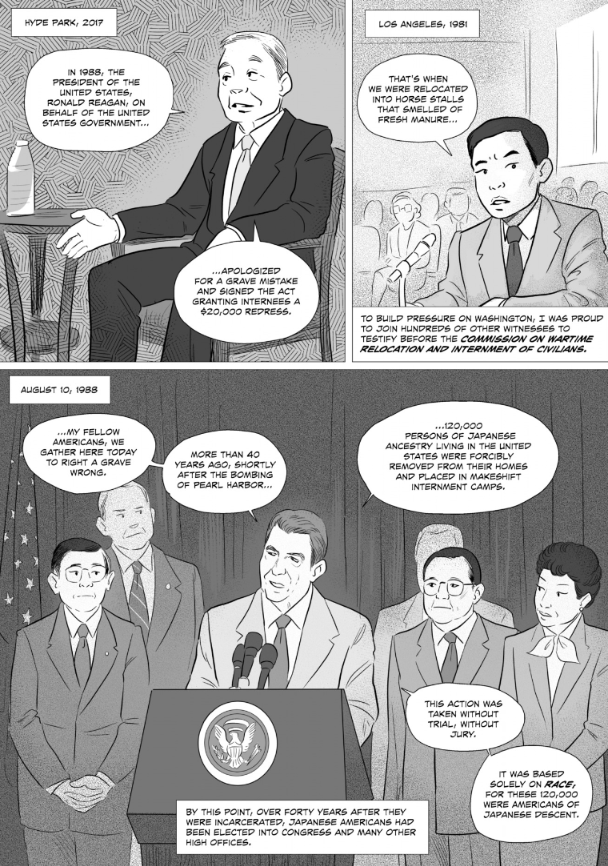
Racism has been prevalent for centuries and, realistically will continue to be. However, after finishing They Called Us Enemy I came to realize the importance of tolerance and acceptance. The entirety of the novel emphasizes the scrutiny Japanese-Americans endure from the U.S. government and their fellow American citizens. But on page 192 shows President George H.W. Bush and the United States government formally apologizing and compensating victims of Executive Order 9066. This event formally addresses how the U.S. government admits and accepts its crude betrayal towards its citizens in 1942. The event of August 10th, 1988, shows how the government brings its faults to the surface and willingly chooses to settle unconstitutional and unresolved past conflicts. But more importantly, it gives closure to the affected families and the issue itself. Although it took nearly 50 years after the fact, August 10th, of 1988, allows all American citizens to reference and tolerate such a historical event. Usually, when government officials decide to bring light upon certain issues, the majority of its citizens acknowledge and become exposed to the same issues at hand. When an affair has more exposure, tolerance and intolerance are naturally developed. However, not exposing or acknowledging a matter at all, makes individuals secrete to their prejudices. This is why lack of education and awareness makes racial prejudice a prominent issue. In context to August 10th, 1988, I hope to see the U.S. government take more accountability and action for the country’s flaws and conflicts.
It is unfortunately impossible to cut racism “from the bud”. But I have faith and will continue to strive for tolerance, exposure, and reform, so one day we can live in a more accepting and tolerant society than today.

 Quaranteen