It is more often than never to find that people generally lose control to life’s absurd and unexpected circumstances. What does it mean for someone to lose control? One’s strength, hope, and familiarity? Why is control and power so desirable and significant to have?
The short graphic novel ,They Called Us Enemies. conveys the story experience of a family who lived through the harsh realities of the Japanese incarceration camps. Upon reading the narrative, it can be observed that there is a quote repeated on two pages, “…you knew this was forbidden” (pg. 68-69). Stated by the main character’s, George’s, father he referred to the sewing machine his wife had taken to the Japanese incarceration camp.
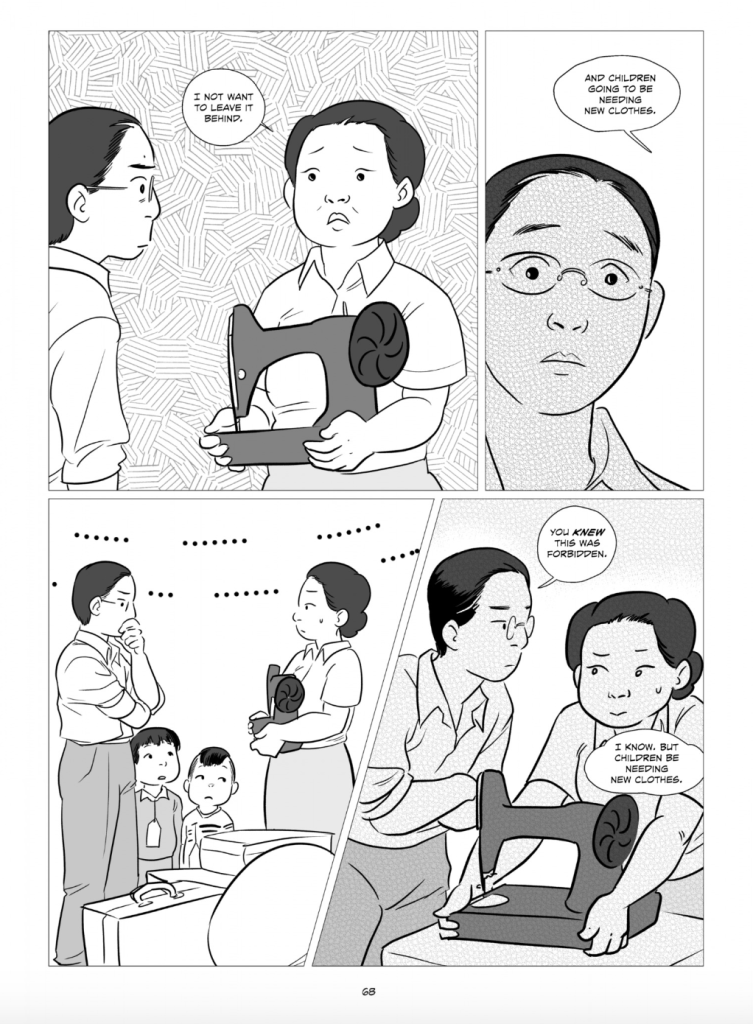
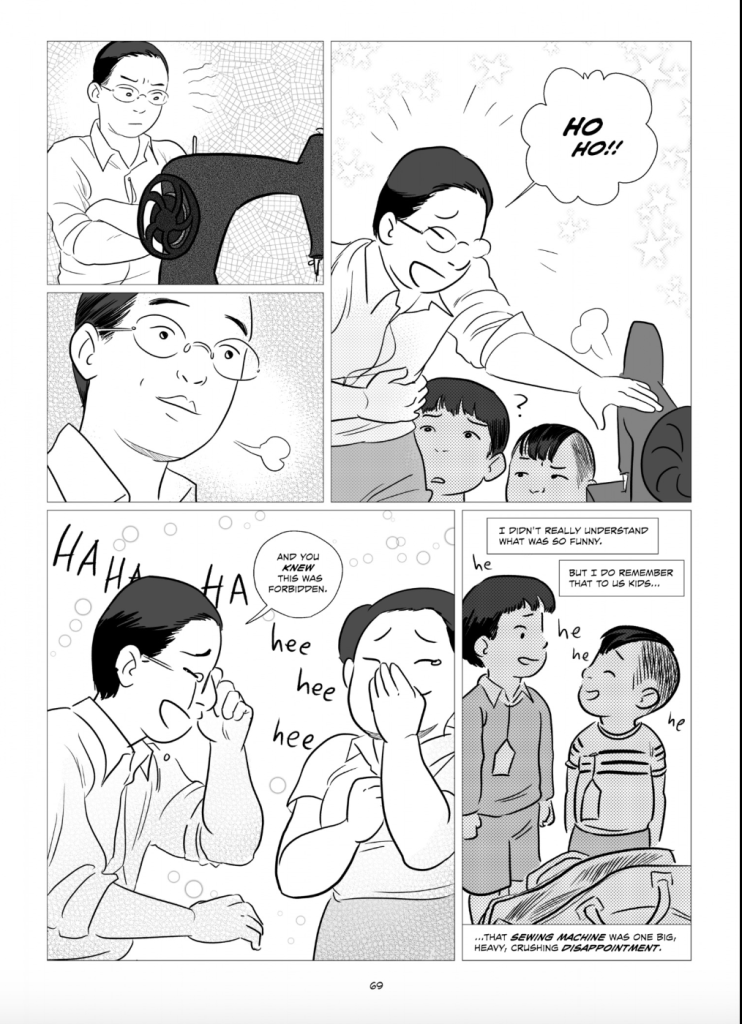
On pages 68-69, the author purposely has the father mention how the sewing machine was forbidden twice. It signifies the first sign of defiance and control. After losing everything from their normal lives, the parents laughed believing that they had one little victory for their family.
George’s father, first states the line seriously. Then a second time, while laughing along and even crying with his wife. Knowing that they had broken the rules and the strict control of those in power they had gained just a little more freedom and control back. After the events of being taken into the incarceration camps, their money, their rights, their freedom had been stripped away. Taking the sewing machine with them resulted in a moment of victory for the family. George’s family was successful and happy in their previous life before being forced in the incarceration camps. They were in control before. For someone to lose it all without being able to do anything is devastating, especially after all the hard work they contributed into building up their lives.
When losing everything to someone who has taken higher authority and control, gaining even just a little power, hope, and control back can be significantly meaningful. Having rights and freedom is significant for everyone and should never be taken away, instead it should be upheld.

 Quaranteen