Immediately after a 10 minute presentation, multiple studies have shown that the audience remembered 50% of what was spoken. The following day, it dropped to 25%, and the following week further down to up to 10% retained. Thinking about the consistent amounts of effort a person takes to prepare a presentation, finding information, picking and choosing the necessary information, editing to make it look nice, practicing their speeches, memorizing the words, crushing their nerves before presenting, it almost seems like a waste. After all, no one even will remember what is said.
Besides, who even really cares? The presentation was made and completed maybe for a class, for a grade, for your club, hopefully making you see smart, and that is all. Anyone who really cares can just look at the slides or pamphlets again, right? Maybe for many, that outcome is the only thing that matters to them, but the original and consistent purpose is to educate the audience on something you want to talk about and so that they hopefully will learn or care more of the topic.
An audience who can’t even remember half of the presentation becomes an issue when the topic that is being shown is of great importance. If a person were trying to incite a movement, persuade a group to favor a particular side in an argument, or teach a new topic, these statistics suggest that only a few would join, the rest left behind with their lack of recollection and as such, their lack of interest. So how would this be solved? Perhaps the only way is to beat it into their brains, repeat it over and over until they are forced to care and remember.

Simply repeating the information will not make people care. In fact, it is more likely they will be opposed to the topic now due to being forced to hear the same thing. It is painful for everyone, the speaker and the audience because it is boring, and all that effort goes down the drain. But why doesn’t the presentation stick? It is usually meaningful, there is a plethora of details to enhance the importance of the topic, and the educated tones in a planned lecture shows it is from a professional speaker and of a serious subject.
To understand why it happens this way, one must take a few steps back. Think about an assigned presentation as homework, on a brand new topic that you know nothing about. “What is this about,?” you wonder as you type away on Google. “What am I going to talk about?,” you ask as you scroll through various tabs and articles. Aha! You finally figured out what to discuss in your presentation and now must create one. You select meaningful photos, you write paragraphs to memorize and edit the words so that it sounds more sophisticated. Citation lists grow with tremendous speeds over the weeks as the quantity of information is built and modified with a plethora of synonyms. And finally, days of preparation and hours to finally care about the issue result in the presentation. You have a nice, lengthy piece of work and a speech at hand that you wouldn’t have understood a week ago, showing how much you have learned. What could go wrong?

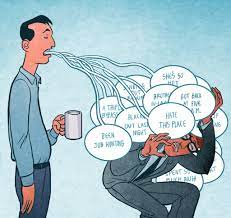
Well, theoretically nothing would go wrong. You were prepared, you knew what to say, maybe a few stutters and pauses along the way but overall, you did everything you needed to proficiently. The issue comes along with the audience. Everyone out there is much closer to you when the assignment was assigned, in the dark, not caring about the topic at all. An entire week of developing a sense of interest, a series of words and sentences that were overly advanced, and details that accumulated over seven days squished into a five to ten minute dissertation. Maybe you understand everything now, but would A Week Ago you comprehend the flurry of information just dumped on them, will the audience, who is equally as uneducated in the topic, understand or care?
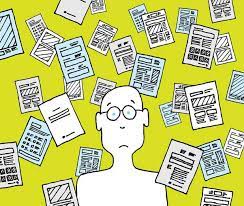
Though I am by no means an expert presenter at the age of 16, I’ve made some considerations and modifications to my Slideshow displays with these concerns in mind. First would to simply choose one or two details to talk about. Something short and quaint can be easily absorbed and remembered. Avoid the scramble of words, the lengthy compound sentences, or the chunky paragraphs. A short idea, and an execution to follow suit.
Another thing I would suggest seems like a terrible idea, but maybe have a greater conversational tone over being overly professional. Someone who is extremely informed on a topic speaking with uncommon language will only add to the confusion of trying to understand the presentation. More often than not, once they fall behind, they won’t listen either. A more conversational tone isn’t only going to move at a speed in which the brain can comprehend, but also keeps the audience engaged. A great example of this is in TED Talks, where the person speaks to the audience and throws in anecdotes and jokes. Obviously, serious and planned sections with specific word choice are not detrimental to the overall presentation, but too much will leave an audience in the dust.
Presenting is a difficult task. You won’t reach everyone, you won’t be able to appeal to everyone, and those two sit on the back burner when you have to plan everything else. But in that same sense, would a simplification be beneficial to both sides? The audience can easily comprehend and have a higher likelihood of remembering or even caring, and there is less intricate preparations or cramming for the presenter.
In a broader sense, there are insane problems that need to be dealt with much sooner than later, but are of too great a magnitude to be dealt with a few people. Support and spreading information comes in tandem with presentations. As such, it is pivotal to get as many people to comprehend and show concern in the speeches and explanations, and I firmly believe simplification is a great place to start on that process. Perhaps since the distance to success in which the world does work together to solve these massive issues is much too far. And maybe that length is intimidating, and the sense of urgency encourages a process of large leaps. But not everyone can make that same distance, not everyone is willing to put in the effort to jump that far, some people might fall and be discouraged, leaving everyone in a mess. So maybe, just maybe, the best option now is to convince everyone to take the first step. A little step in the direction of consideration of the issues at hand with a simpler presentation.

 Quaranteen