“Better three hours too soon than one minute too late.” -William Shakespeare
“Don’t put off until tomorrow what you can do today.” -Benjamin Franklin
This are quotes I would like to say I live by. However, the truth is I am plagued with chronic procrastination. Procrastination is defined as: the action of delaying or postponing something. This is a problem that many of us are guilty of. Stuck in the cycle of procrastination we occupy our time with aimless activities to avoid important tasks. Oftentimes, I find myself doing anything at all, aimlessly scrolling through Instagram, indulging in Netflix shows for hours, even staring at a clock listening to the seconds tick by instead of doing what I should. Though not a debilitating condition it’s persistent. Cyndi Lauper described it best in her song Time After Time singing,
I’m walking too far ahead
You’re calling to me, I can’t hear
What you’ve said
Then you say, “go slow”
And I fall behind
The second hand unwinds
If you’re lost you can look and you will find me
Time after time
My vocabulary consists of words and phrases like, someday, tomorrow, later, perhaps, not yet, never, and one day. In all honesty I really have no idea why I put myself through the stress and anxiety of starting things last minute but as with any formed habit, it has become inescapable cycle.
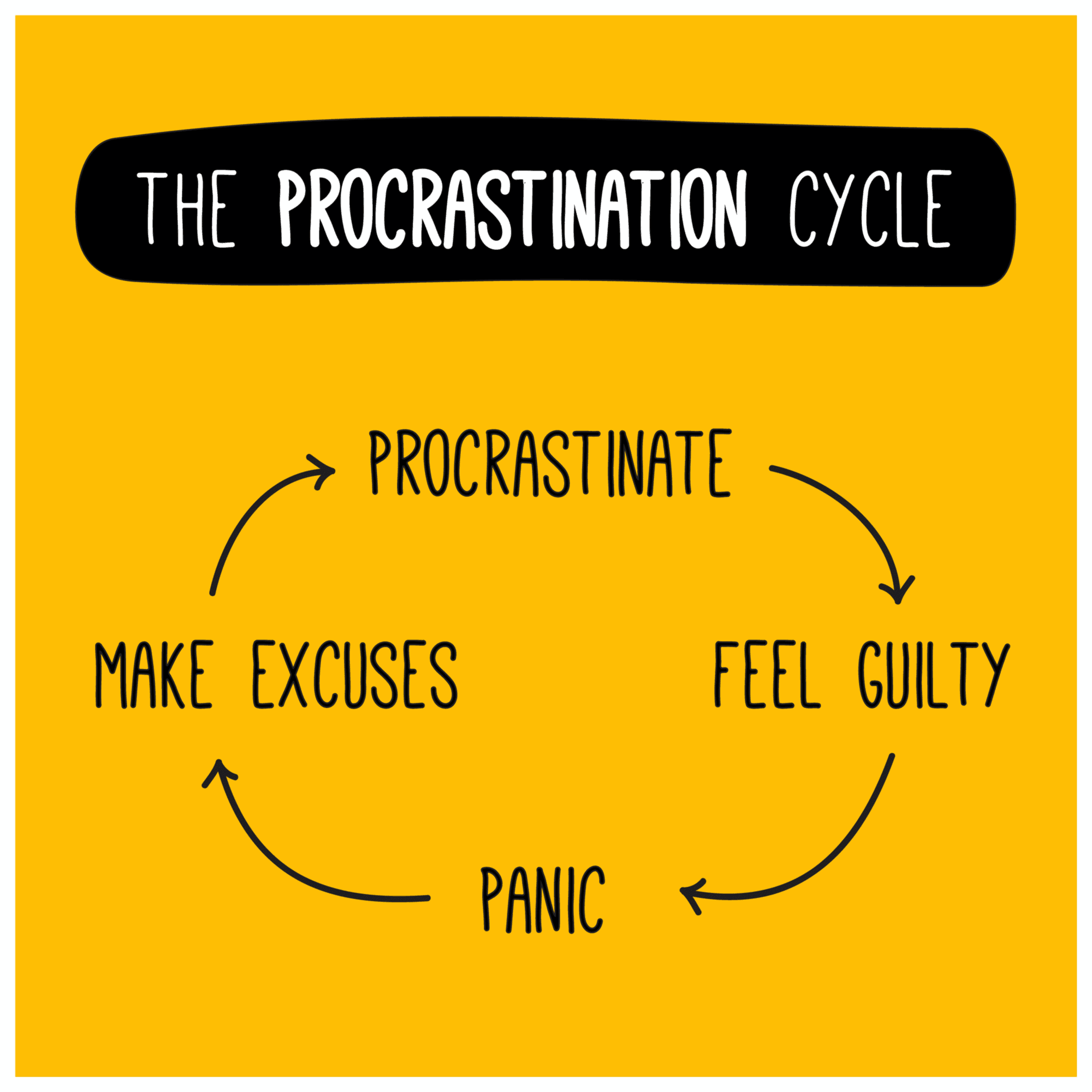
In an age where we have so much to do and so little time why is it that 80 to 95 percent of students choose to squander their time and put off what they need to do? With only 24 hours in a day why is time squandered to make excuses to not be productive? Common excuses consist of…
- “It’s not urgent.”
- “I don’t know where to start.”
- Fear of failure (Perfectionist)
Although it seems hopeless, we can end the cycle. In order to do this we need to first tackle the excuses we make. The task might not be urgent but looking at the bigger picture we need to realize that these tasks are all small steps leading to a bigger goal. Doing this now means that we won’t have to struggle it later.
Not knowing where to start can feel overwhelming and putting tasks off can be a result of this. To address this problem we have to come to terms that starting something new can be confusing, difficult, or irritating but this is the natural process of starting. Starting later only means that we’re avoiding our emotions only to have to deal with them later.
Fear of failure is completely normal. Those with high standards, particularly self-proclaimed perfectionist have trouble coming to terms with the fact that their performance is not tied to their self worth. We are not defined by who we are not what we accomplish.
Looking back will we regret what we did? How we acted? Would we change anything? Would we have put off what we could have done? If we continue to procrastinate we’ll never know what could have happened if we had done things differently. We’ll have to live our lives not knowing if we ever reached our full potential, so why procrastinate?

 Quaranteen